Friday, March 28, 2008

Screwball/Romantic


Screwball comedy is something I think that you have to get used too. It is something really different from the traditional comedies of our era. The film His Girl Friday (1940) is a prime example of a screwball comedy. This movie takes place in a newspaper headquarters. It is the story of the head director trying to get his wife back that works in the same building. It shows some different aspects of comedies and has some good scenes in it. Screwball comedies are different from romantic comedies in a couple of ways. An example of this, is that screwball films don’t really show that intense sexual interaction, and or realistic romance. It tends to emphasize the funny side of love versus the serious side. It often makes fun of the process that romantic comedies intend to do. The characters are also often eccentric. This is true of the characters in His Girl Friday. This is seen when the character that is in love with Earl Williams, suicide attempts are ignored. By more or less ignoring the suicide, it is the most upbeat way of dealing with it. The ending of this movie is also typical for a screw ball comedy because the action happens until the very last moment.
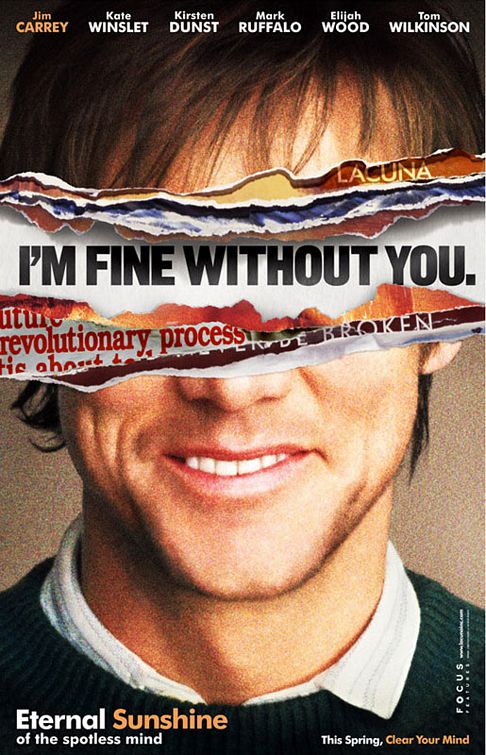
In romantic comedy one gets a different sense of the humor because there are a lot more physical and romantic aspects. An example of a romantic comedy we watched in class was, Eternal Sunshine of the Spotless Mind (2004). This is a typical romantic comedy in many ways. It emphasizes love versus comedy. This movie in general was sad and emotional; it hits the heart a lot more then the screwball comedy. The plot does slow down at the end which is also typical of a romantic comedy. This leaves the audiences questioning if they will end up together.
The two films His Girl Friday and Eternal Sunshine of the Spotless Mind are very good, but very different. His Girl Friday falls under the "screwball comedy" category while Eternal Sunshine is more of a "romantic comedy."

Tuesday, March 18, 2008

The Western Aspect


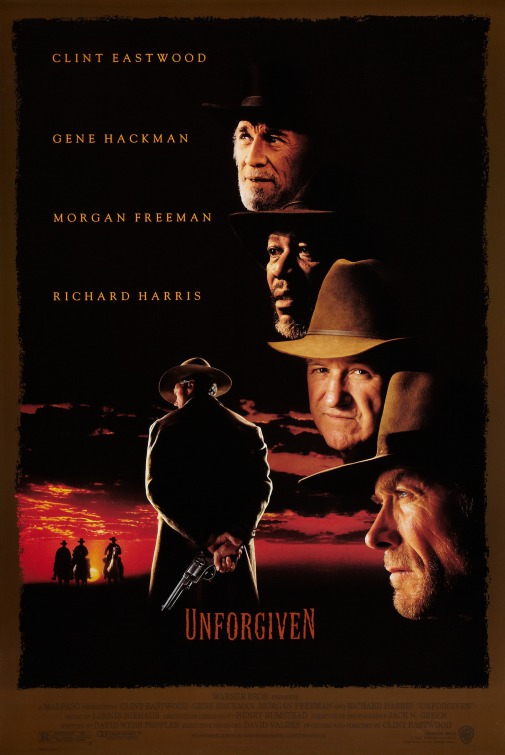
A topic of theme I am picking to write about is about Unforgiven and StageCoach. The first topic I am going to discuss with you is that cowboys are very reckless and will shot for no reason. In the film Unforgiven you see gun play in a lot of the scenes they show. It is almost a normal to expect a gun in almost every scene you see. But the cowboys in the movie do show some different sides to them involving the guns. For example Ned can’t shoot because he can’t shoot an innocent man. Will has to take over and kill him for Ned. This shows that Ned has some judgment and sees what will happen if he does. But on the other hand Will does not show any remorse when killing someone and does it with no thoughts. In a totally different scene you see Will not kill anyone and he just seems very calm about the whole situation around him. StageCoach on the other hand seems like they don’t use guns as much as they did in Unforgiven. This to me is very odd because in a western you see a lot of guns and in StageCoach you do not see many at all. An example of this is when Ringo tries to escape and the sheriff doesn’t even fire a shot he just runs after Ringo to stop him. I really don’t know about this movie because you want to see gun play in a western and I don’t like that there wasn’t much in the movie.
Another topic I will talk about is the role of women in the two films. In StageCoach they do not play as a big role and do not see them in many shots of the movie. I mean some scenes have them but throughout most of the film they just play a person who cleans and helps the home. But in Unforgiven it is the totally opposite. They play a big role and they are really all way thought the movie. One of the whores cut her faces cut up and the rest of them put a bounty of the heads of the cowboys who did this. This shows that they have a power or importance in the movie which is a very weird thing to see. Another thing you see in the two films is that the sheriff doesn’t seem to have much influence. In Stagecoach the sheriff holds Ringo the whole trip but he really doesn’t show your typical cop beating up on the inmate. But in Unforgiven little Bill shows no mercy on the cowboys and whoever get in his way. He whips beats and does anything he can to stop the violence in his town.

Wednesday, March 12, 2008

Behind the scenes


Hondo Behind the scenes

The film I chose was Hondo and it was directed by John Farrow in 1953. The main character Hondo is played by John Wayne a lone cowboy on a mission. When Hondo first came out it was a little too late. What i mean by that is that the film actually incorporated 3-D throughout the film. But when they released it the film was at the very end of the 3-D boom for the time period. But too be at the end of the period it actually did pretty well in the box offices. People were excited to see there favorite cowboy back in the saddle after three years without him in the spotlight of a western. As Bob Furmanek and Jack Theakston say “John Wayne's western masterpiece HONDO (1953) has long been heralded by critics as one of “the Duke's” finest independent achievements.” It shows that the critics actually really liked Hondo and what John Wayne contributed too it.
But they go on to say that the public was not very interested in the film which seemed wrong to me. I got the impression that the audience really liked Hondo but I honestly don’t know. The public wanted too see a great 3-d movie and maybe it did not live up too there dreams of what they were hoping. Personally I liked the 3-d I saw in the movie and it added a aspect I would have not expected. I think that today it would have done not too great. Just because these days’ people really dislike westerns because of there simplicity of the same boring plots. But back then I would have thought it would have done really well.
John Wayne as Hondo in the film did a tremendous job in the movie. He did an awesome job with acting and he played once again the strong silent type looking I thought for a fight. But he also had a soft side to his madness and actually cared about others and there feelings. You just expect John Wayne too be this big tough angry cowboy who is the bad guy. But no he is the hero of the movie and helps the people of the Mexican desert. The other charter I am going to tell you about is the little boy Johnny. He plays a key role in the film because he plays as the ambassador between his mom and the Indians. He is just a really layed back kid and plays his role really well. I enjoyed him the movie and would like too see more of his films. The music in the film went hand and hand with each other. I thought the music played a great role in tying the movie into the old west. It was the typical cowboy music that everyone knows and expects out of a western these days. Too sum up the movie i would half to say that i really enjoyed the film and it was all around a decent movie. I would recommend it too anyone who likes westerns or John Wayne. The picture is from http://www.mikequatro.com/westernposters/hondo.gif

Wednesday, February 27, 2008

The Review of the century


The Best Review

Rebel Without a Cause is the film I choose to watch for my review. The film was directed by Nicholas Ray and was set in the 1950’s. Reading Roger Ebert’s review opened my eyes to see how much I agreed with him and some points were I disagreed. For example when the reviewer said, “ if he had the guts to knock mom cold one, then maybe she’d be happy and she’d stop picking on me”. I agree with this totally because it portrays Jim as a big scare cat and that he cant step up and do what he really wants. The main characters in the are Jim stark played by James Dean, Natalie Wood plays Judy and last but not least Sal Mineo as Plato. I thought the characters played their roles very well and they convinced me that it was the 19050’s and that is how they acted back then.
The movie takes place in a small town in mid America in the 1950’s. The rumble in the film is revolving around Buzz (Corey Allen) who just does not like Jim. Buzz challenges Jim to a chicken run and Jim being the dumb new kid aggress. The film seemed realistic to me but as Ebert states “ The film has not aged well, and Dean’s performance seems more like marked down Brando than the birth of an important talent”. I did agree with this statement because Dean just seemed really bad for this role or maybe his acting was just terrible ho knows. Judy did a great job I thought she really pulled the movie together with her acting and helped the film out a lot.
The acting throughout the film was more funny then believable. They just seemed to be trying too hard too to betray their characters. So I really thought most of them could have done a lot better. I did not believe the actors were the characters. Was a big disappointment? The reviewer better explains my point in saying “Rebel Without a Cause" plays like a Todd Solondz movie, in which characters with bizarre problems perform a charade of normal behavior”. The sets of the film I thought were very well put together and they made the film easier to believe when watching and critiquing. I thought the costumes could have been a little better for the time but they were actually pretty believable for the time period I enjoyed them.
The director employed a couple of camera angles I noticed as a viewer. The first one a noticed a lot was the long shot in most of the action shots. It gives the viewer a better angle too sees what’s actually going on and get a better since of the film. He also used the close-up more it seemed then any other to show the expressions of the character’s in the scenes. I thought this was a good idea because it gave you a different aspect and was just a good technique in the movie. I thought the films shots were a little dragged on for some god-awful reason. Just do the shot and get out of there don’t just drag it on It got really boring after a while.


After reading a review on the new movie, “American Gangster”, by Roger Ebert, it obvious that our views on the movie are similar. This movie is set back in the Vietnam War; the director (Ridley Scott) does a great job with set designs and costumes to make it clear at what time the story takes place. The director also places within the movie some shots of the war which adds to the realism. The main actors both did a stellar job as the critic points out. Russell Crowe plays the lead detective and Denzel Washington plays Frank Lucas, the main drug liaison.
As Ebert points out it is in Denzel’s calm demeanor and “Brooks Brother’s” image that he is not suspected right away. On top of this, his ethnicity (being African American) aids in the cover up of him taking over the Harlem drug trade form the Mafia. Also he is not as obvious as a gangster, because he is not wearing modern day “bling.” Just as the reviewer states, “...Denzel Washington is in another one of those performances where he is affable and smooth on the outside, yet ruthless enough to set an enemy on fire” (Ebert, 1). Ebert then goes further to point out that while he is a gangster he still has class.
Roger Ebert points out something about the female lead that I really agree with. Too often we have women playing the same roles over and over again in the movies. In this particular movie it is the image of the wife forcing the husband to choose between his job and his family. This is seen in many modern films of today, be it Lord of War or The God Father. Which is way Ebert says, “But that doesn’t save us from the stock female character who are becoming increasingly tiresome in the movies” (1) and also “Their obligatory scenes together are recycled from a dozen or a hundred other plots” (1). As the critic points put, “Roberts’ domestic crisis is not what the movie is about” (1). This part of the movie felt like a filler. Furthermore, it was hard to feel empathetic, since this image keeps getting recycled.
I must agree with the critic when he stated that the ending of the movie was surprising. With your typical or comparable movies the end is a huge blow out. “The film ends not with a ‘Scarface’ style shot out, but with Frank and Richie sitting down for a long intelligent conversation” (2). This ending seemed refreshing, especially after some of the roles (as mentioned above) were tiresome.
The last thing I noticed was the critic never commented on the length of the movie. I found that some scenes had been dragged on and that it could have been cut down. Overall, he hit the nail on the head with his review. In the future, I would read more of Roger Ebert’s reviews, it seems like he knows what he is talking about.

Introduction

I decided to sign up for this class because I have an interest in movies. This interest continues to expand and I want to learn specifics about them. This includes: camera angles, a more developed sense of taste, as well as terminology to discuss movies. I have to be honest and say I also signed up because I heard we got to watch movies in class. I am looking forward to this experience and I am excited to see everything I will learn.